Monitoring Temperatures
Temperature monitoring plays an important role in protecting the vaccines that protect your patients. Twice daily temperature monitoring helps to prevent loss of expensive vaccines by identifying out-of-range temperatures quickly and allowing for immediate corrective action. Temperature monitoring is dependent on four key factors: well-trained staff, reliable and accurate equipment, complete documentation, and immediate action for any out-of-range temperatures.
Routine Actions
Incorporate these steps into practice protocols:
- Record temperatures twice daily: at the beginning and end of the clinic day.
- Maintain refrigerated temperatures between 36°F and 46°F (2°C and 8°C).
- Maintain freezer temperatures between -58°F and 5°F (-50°C and -15°C).
- Take immediate action for all out-of-range temperatures.
- Report temperature excursions in myCAvax and comply with guidance before administering affected vaccines.
Temperature Excursions
Respond to all temperature excursions and data logger alarms. Quarantine and do not administer affected vaccines until vaccine stability has been determined.
Damage to Vaccines
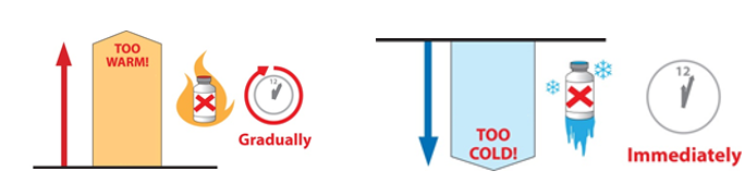
Potency is reduced every time a vaccine is exposed to an improper condition, including overexposure to heat, cold, or light at any step in the cold chain. Once lost, potency cannot be restored.
Taking Action
Take immediate action to prevent vaccine spoilage for all out-of-range temperatures and correct any improper storage conditions. Label vaccines Do Not Use (PDF) and notify supervisors and Vaccine Coordinators that affected vaccines may not be administered until vaccine stability has been determined.
Reporting in myCAvax
Report temperature excursions in myCAvax for any data logger recording temperatures for publicly supplied vaccines and follow guidance provided. Refer to the myCAvax Knowledge Center for step-by-step reporting instructions.
What’s reported. Providers report incident details, including length of temperature excursion, minimum and maximum temperatures, and possible cause. The data collected is used to determine whether vaccines are viable and may be administered.
After reporting. Follow instructions and contact manufacturers if indicated to determine vaccine stability before administering affected vaccines. Never discard vaccines until advised by your Field Representative or the vaccine program.
How to Record Temperatures
Record storage unit temperatures on the universal temperature log (PDF). To comply with program requirements and best practices, follow guidance in How to Record Temperatures (PDF) to monitor temperatures, complete supervisor review, and respond to temperature excursions.