Emergency Preparedness
CDC requires that every provider complete and maintain a vaccine management plan that documents how staff should respond to vaccine-related emergencies, including storage unit malfunction, power shutoffs, natural disasters, or other emergencies that might compromise vaccine stability. Do not risk staff safety during emergencies. Plans should be guided by common sense when attempting to protect vaccines.
Packing Materials
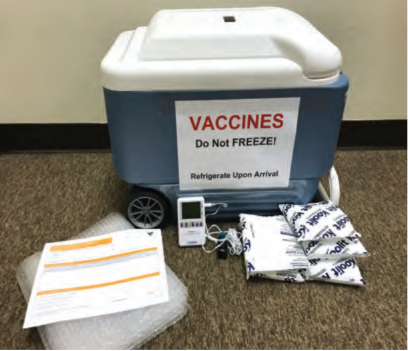
Providers should stock sufficient packing materials for transport of their largest annual inventory.
- Portable vaccine refrigerator/freezer/ultra-cold freezer units (preferred option) or qualified container (e.g., hard-sided cooler) and packouts
- Frozen water bottles, cold packs, or coolant materials such as phase change materials (PCMs) that can be conditioned between 4°C and 5°C (39°F and 41°F)
- Enough insulating material (e.g., bubble wrap and corrugated cardboard) to form two layers for each container
Unacceptable Materials
- Manufacturer’s original shipping container and temperature monitoring device
- Frozen gel packs or coolant packs from original vaccine shipment
- Food/beverage coolers
Power Shutoffs
Energy companies may need to shut off power during extreme wildfire conditions to keep the community safe or to reduce power consumption during extreme heat. This Public Safety Power Shutoff (PSPS) is a tool of last resort. Power shutoffs can last from several hours to many days. Their impact may extend across city and county lines.
Register for alerts. Register for emergency alerts with your utility company and county.
Be prepared. Many organizations and agencies offer a variety of emergency preparedness plans, checklists, and tips for PSPS and emergency situations. Update the provider vaccine management plan as necessary and learn what other steps staff can take to be prepared.
Wildfires
Unlike power shutoffs, encroaching wildfires affect staff safety and may require leaving the practice or clinic for an extended period of time. Do not risk staff safety during emergencies. Follow CAL FIRE guidance to prepare and stay one step ahead of California wildfires.
In a high fire risk area? Use the CPUC High Fire Threat District (HFTD) App to see if your practice or clinic is in a high-risk area.